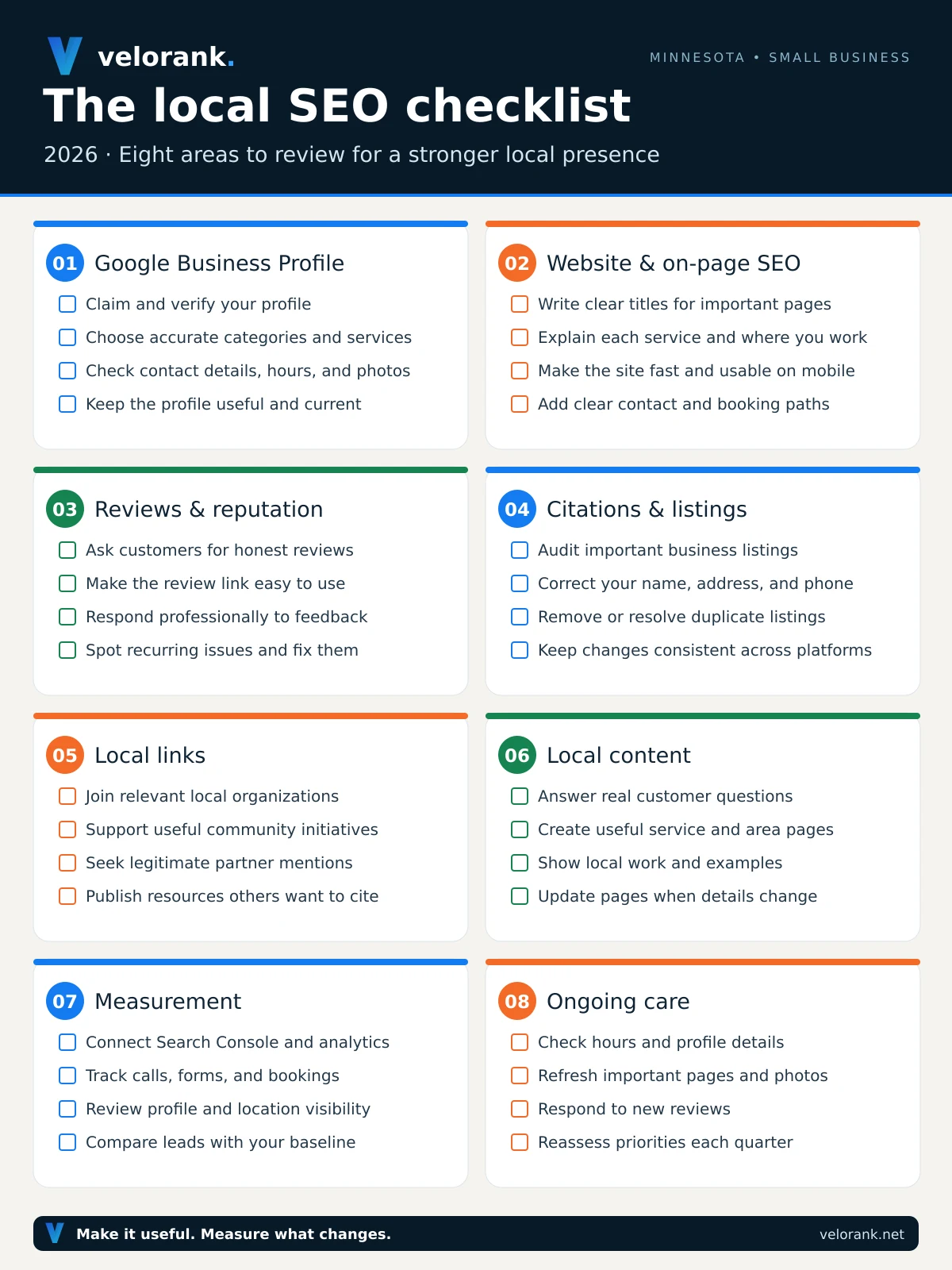
You do not need to finish all eight areas in one day. Fix incorrect business information first, make your key pages useful, then establish a way to see which work brings qualified inquiries.
01
Google Business Profile
Claim and verify your profile if your business is eligible. Choose the most specific category that describes your real work, add relevant services, and keep hours, contact details, and photos accurate. A service-area business should set its profile up according to its actual operations. Recheck the listing after a move, seasonal hours change, or change in services.
Read the Google Business Profile guide ↗02
Website and on-page SEO
Give each important service a clear page that explains who it is for, what it includes, and where you provide it. Use descriptive page titles and headings, connect related pages with useful links, and make contacting you straightforward. Test the experience on a phone and fix speed or usability problems that get in the way.
Explore SEO web design ↗03
Reviews and reputation
Ask customers for honest feedback at a natural point in the relationship. Provide a direct review link, respond to both positive and critical reviews professionally, and use recurring feedback to improve your service. Avoid purchased or incentivized reviews. Reviews should help customers make informed choices.
Explore the reviews guide ↗04
Citations and business listings
Start with listings customers actually use, including major maps and reputable industry directories. Compare your business name, address when public, phone, website, and hours. Correct stale information after a move or number change and resolve duplicates where possible. Keep a record of the listings you manage.
Read the citation guide ↗05
Local links and mentions
Look for natural local relationships: chambers, community organizations, event partners, suppliers, and nearby businesses you work with. A relevant mention or link may send qualified visitors as well as help people discover your business. Skip schemes that exist only to manufacture links.
Explore local ranking factors ↗06
Useful local content
Publish information that answers a customer question or helps them choose a service. Show real projects, neighborhoods you genuinely serve, local constraints, and practical examples. Distinct service and area pages should contain distinct, helpful information rather than swapping a city name into the same copy.
Read the local content guide ↗07
Tracking and measurement
Set a baseline in Search Console and your analytics tool. Measure the outcomes you care about, such as qualified calls, forms, bookings, and sales, alongside search visibility and profile actions. If you monitor rankings, sample multiple points across the service area: one location does not represent the whole city.
Learn about local rank tracking ↗08
Ongoing maintenance
Check hours, business details, and new reviews regularly. Refresh high-value pages when services or service areas change, review important listings after business changes, and revisit your measurement each quarter. Prioritize the fixes most likely to improve the customer experience and lead quality.
Browse all VeloRank guides ↗